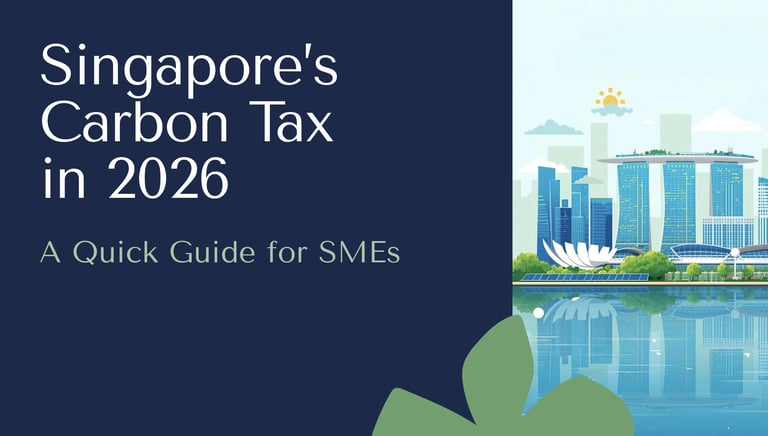
Singapore’s Carbon Tax in 2026 – A Quick Guide for SMEs
Case study
Project: Educational guide for SMEs on Singapore’s rising carbon tax
Scope: Research, content strategy, writing
[Note: This guide was produced by Clickcopy LLP as a sample and is not commissioned work. Gprnt was not a client, and the content was written based on publicly available information. The guide includes a case study based on a real-world SME example.]
About the company
Gprnt is Singapore’s national digital platform for sustainability reporting backed by the Monetary Authority of Singapore. Its carbon accounting tool is designed to help SMEs measure and track emissions while simplifying emissions reporting.
Problem
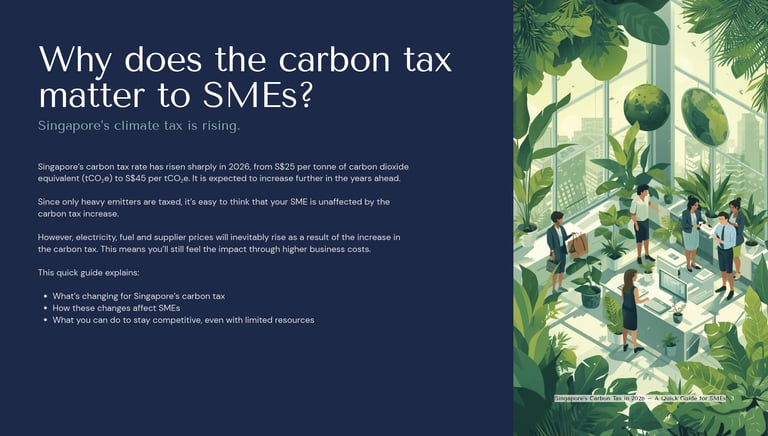
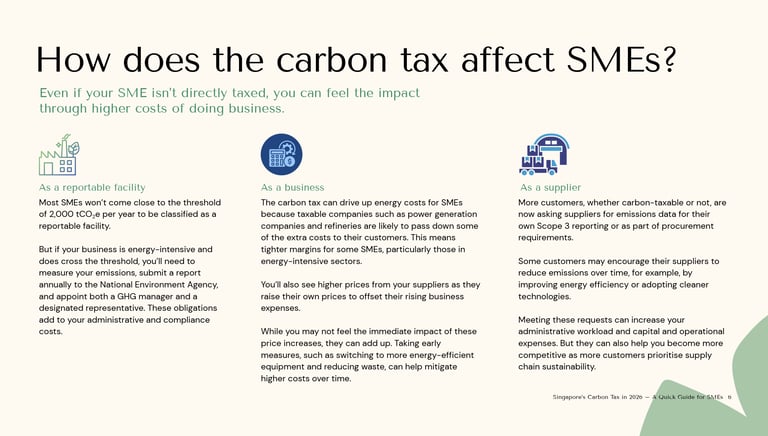
Singapore's carbon tax has risen sharply. SMEs aren't taxed directly, but they'll feel it through higher business costs and growing pressure to reduce and disclose emissions.
Most existing resources on Singapore’s carbon tax, produced by the government, are too high-level for SMEs – they don't explicitly explain what the carbon tax environment means for SMEs.
SME managers are aware of the pressures (rising costs, emissions data requests) but unclear about what to do.
Solution
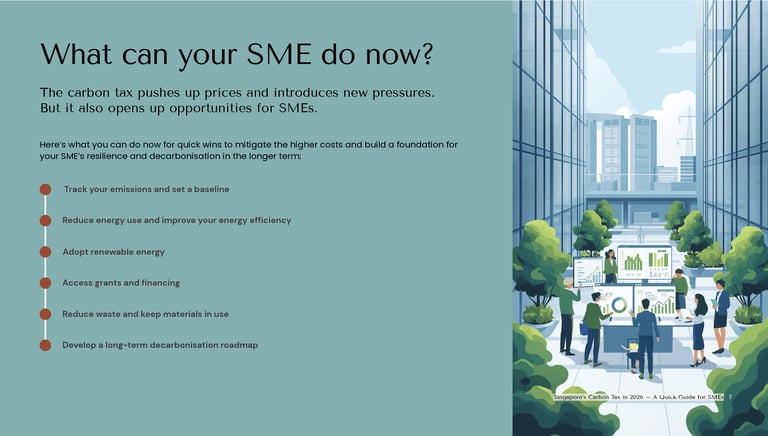
The guide needs to educate SME managers on the carbon tax, the implications of the tax increase and the actions they can take in the carbon tax environment.
It should be:
accessible for time-poor SME managers
clear and easy to understand to be genuinely useful
specific enough to move readers towards tracking their emissions with Gprnt
The content strategy was as follows:
grounded the guide in current, verifiable information – by reviewing government sources, industry reports and bank sustainability programmes
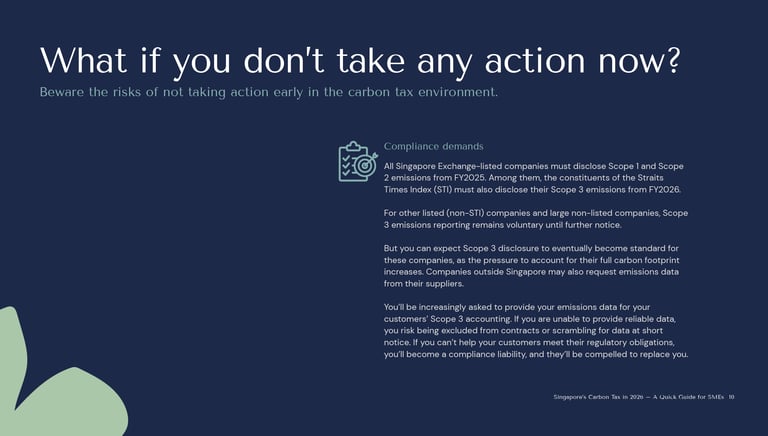
created context, relevance and specificity – by showing SMEs that the tax affects them through costs and customer pressure, and the costs of inaction
followed a logical context-problem-solution structure – for a cogent and persuasive argument that moves readers to action
included a case study – for proof and relatability by showing the steps other SMEs could realistically replicate
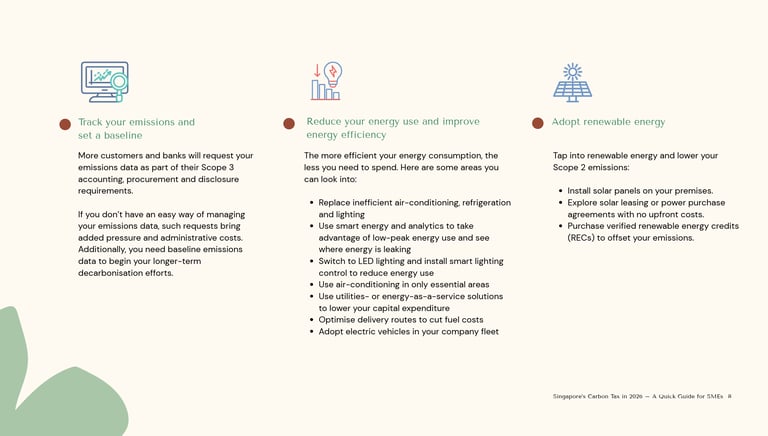
provided structured actionable steps to make this a helpful (and not just informational) guide
positioned Gprnt as the logical next step — not as a sales pitch, but as the practical answer to the question SME managers will have in mind after reading the guide: How do I actually mitigate the risks and capture opportunities in the carbon tax environment?
used plain language and a glossary – to reduce overwhelm for non-specialist readers
kept the tone neutral and practical to suit the brand
Result
A mid-funnel guide designed to:
build urgency among SMEs that don’t yet see the carbon tax as a problem
educate non-specialist readers without overwhelming them
drive sign-ups to Gprnt by positioning the platform as the natural next step
be gated, shared by the sales team or distributed through government and banking partners
Need guides that your buyers will actually read, share and act on?


Jat Leng Low
Menu
Connect
© 2026 Clickcopy LLP. All rights reserved. Privacy policy. Terms and conditions


Climate tech writer and sustainability copywriter. White papers, research reports, thought leadership and website copy for climate tech and sustainable businesses.
UEN: T22LL0107H