White paper – Staying competitive in Singapore’s net-zero transition
Case study
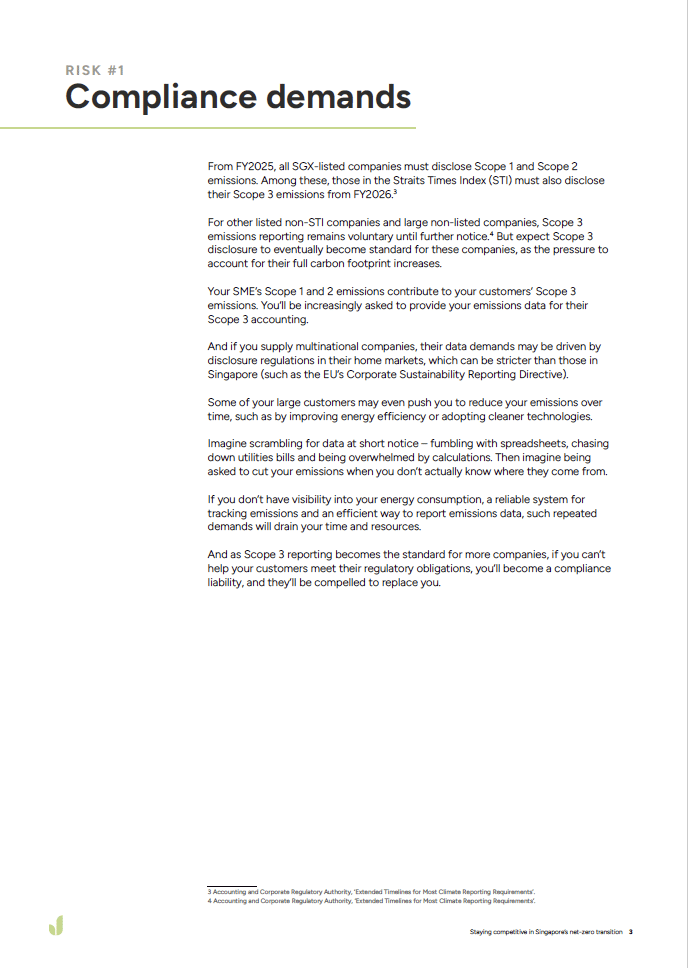
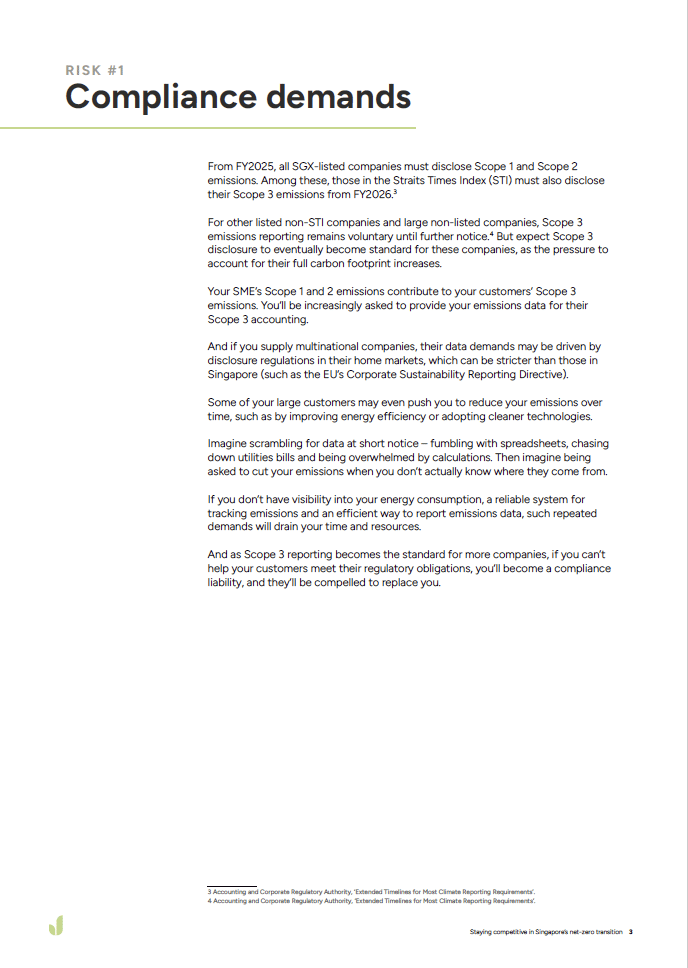
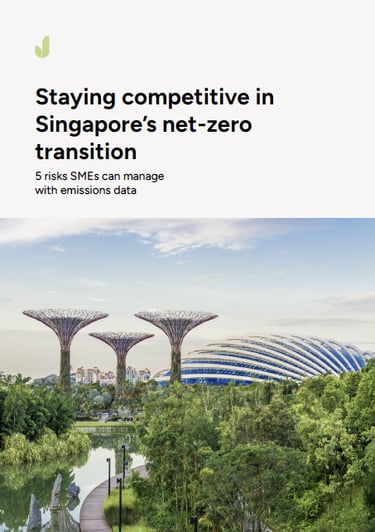
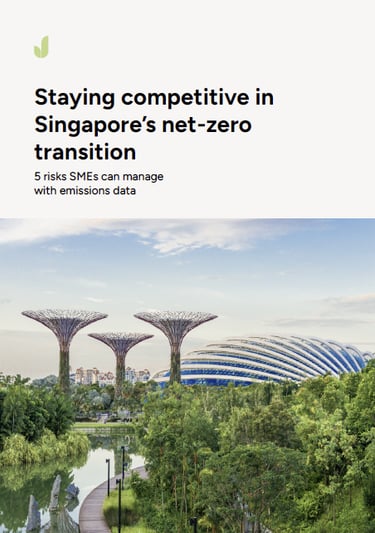
Project: White paper educating Singapore SMEs on the business risks of inaction in the net-zero transition
Title: Staying competitive in Singapore’s net-zero transition – 5 risks SMEs can manage with emissions data
Scope: Research, content strategy, writing
[Note: This white paper was produced by Clickcopy LLP as a sample and is not commissioned work. While Gprnt was not a client, this content was written based on publicly available information about Gprnt’s solution. This white paper includes a case study based on a real-world SME example.]
About the company
Gprnt is Singapore’s national digital platform for sustainability reporting backed by the Monetary Authority of Singapore. Its carbon accounting tool is designed to help SMEs measure and track emissions while simplifying emissions reporting.
Problem
SMEs in Singapore face mounting pressure from rising carbon taxes, regulatory disclosure requirements and demands for supply chain data.
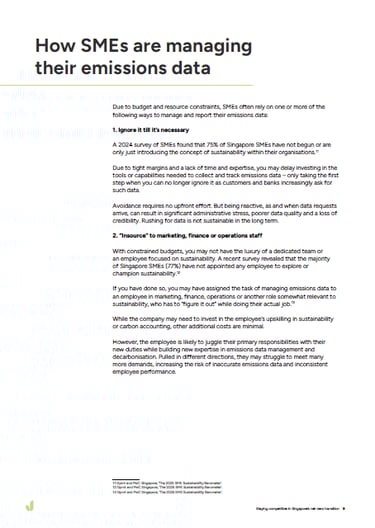
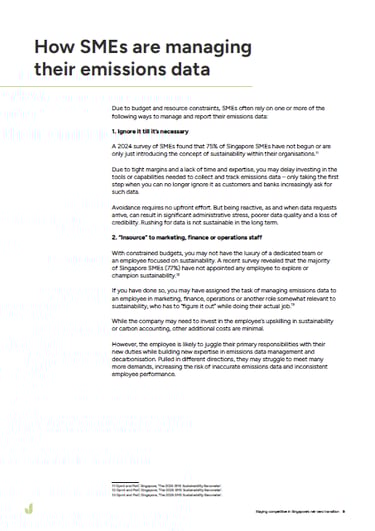
But most don’t see emissions reporting as urgent (75% haven’t begun addressing sustainability within their organisations) or don’t yet grasp how it will reach them or what inaction will cost.
Solution
For SME decision-makers to shift from passive awareness to active concern, they need a clear understanding of the risks of inaction.
With this understanding, they will see carbon accounting as a business necessity rather than as a compliance checkbox. Only then will they have a compelling reason to adopt a carbon accounting tool such as Gprnt’s.
The client needs a white paper that translates abstract sustainability pressure into concrete business consequences that SME managers recognise immediately.
I took a strategy-first approach to the white paper, first identifying the audience and defining the white paper’s objective and the messages the client wanted to convey.
With the audience, objective and messages in mind, I then structured and wrote the white paper based on several principles:
Ground abstract risks in business reality
Articulated five business risks with specific consequences: compliance demands (customers replace you), market access (lose bids), financing requirements (excluded from better terms), cost pressures (margins erode), reputational risk (passed over by investors)
Build SMEs’ trust
Validated their pain points by showing what they stand to lose and describing their current inadequate methods
Supported the argument with trusted data from government sources, industry reports and bank sustainability programmes
Be helpful with no hard sell
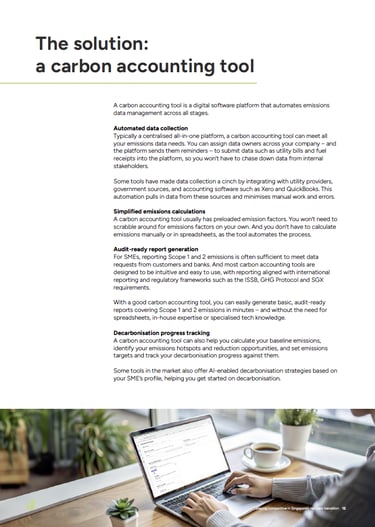
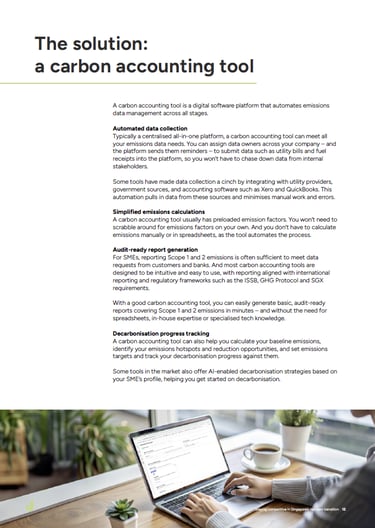
Positioned emissions data as the solution and hence carbon accounting tools as the practical answer, not Gprnt’s solution specifically
Used a case study to demonstrate proof
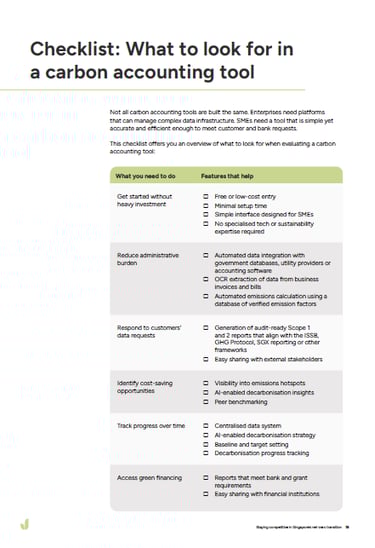
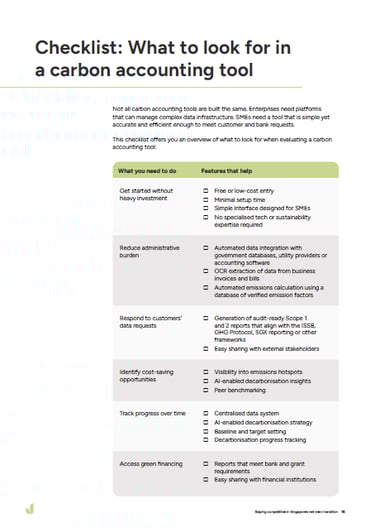
Provided a buyer’s checklist as a helpful guide
The tone is neutral and practical to suit the SME audience. There’s no climate change rhetoric. Instead, the urgency to act comes from straightforward business risks.
Result
A white paper that:
builds urgency by connecting inaction to business consequences
educates a non-specialist audience without overwhelming them
can be shared by sales with their customers to move them from awareness to consideration
provides buyer groups with credible, research-backed content that helps them in evaluating carbon accounting tools
Need white papers that your buyers will actually read, share and act on?


Jat Leng Low
Menu
Connect
© 2026 Clickcopy LLP. All rights reserved. Privacy policy. Terms and conditions


Climate tech writer and sustainability copywriter. White papers, research reports, thought leadership and website copy for climate tech and sustainable businesses.
UEN: T22LL0107H